Olde Del Mar vs Beach Colony: Pricing & Demand Drivers
November 6, 2025
November 6, 2025
Choosing between Olde Del Mar and Beach Colony often comes down to how you value walkability, ocean proximity, and renovation potential. If you are weighing where to buy or how to position your listing, you want more than vibes. You need to understand how lot patterns, view corridors, and permitting shape price per square foot and days on market. This guide breaks down the drivers that matter, so you can plan your search or sale with confidence. Let’s dive in.
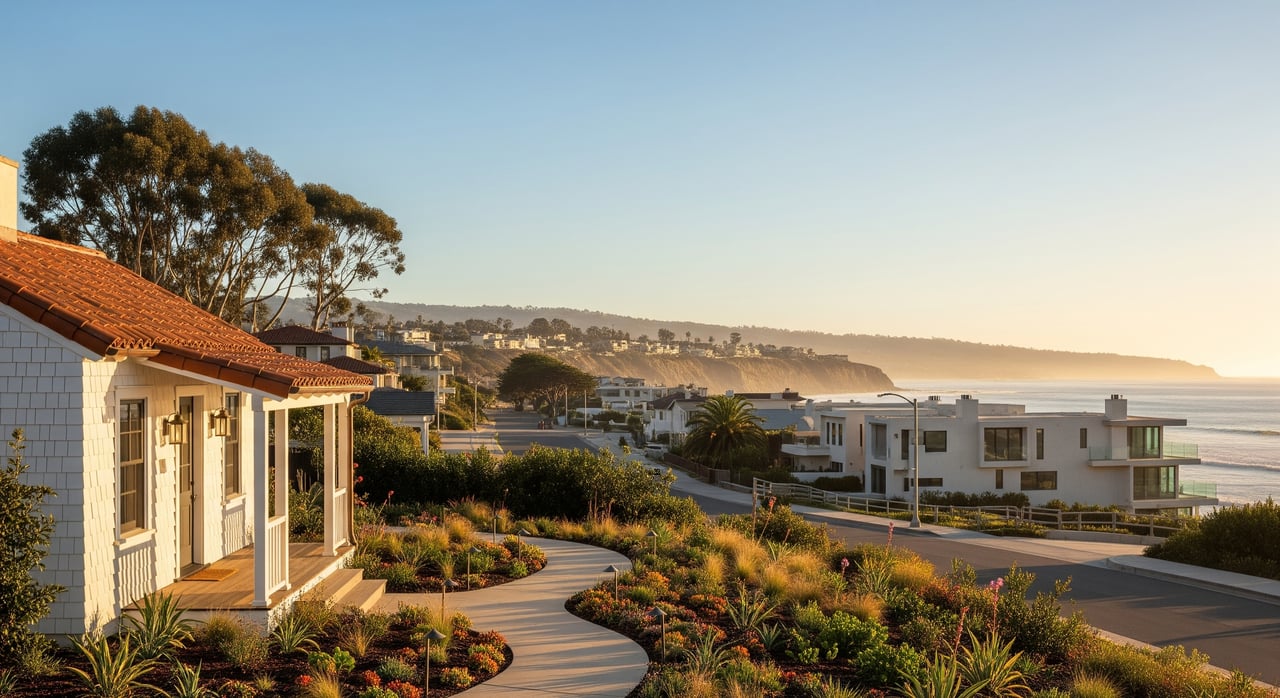
Olde Del Mar centers on the historic village core along Camino del Mar, with a mix of older cottages, low-rise single-family homes, and select rebuilds. You can usually walk to restaurants, grocery, and services, which supports steady, year-round demand from owner-occupiers. Properties fall under the City of Del Mar’s Local Coastal Program and municipal design policies, which shape how you can remodel or rebuild. View protection and height rules can influence massing and add time to design review.
Beach Colony sits seaward of the railroad tracks and Camino del Mar, close to or right on the sand. Lots are generally smaller and more built out, with compact single-family homes and some multi-unit patterns. Demand often includes second-home buyers who prioritize beach access and ocean views. Properties are subject to City of Del Mar rules and state coastal oversight, and some parcels face added complexity from flood, erosion, and sea-level-rise considerations.
Olde Del Mar has more variety in lot size, including older homes on medium lots and occasional opportunities to assemble or expand, subject to zoning. That flexibility creates value-add potential, which can support higher achievable price per square foot when buyers factor in future expansion. Beach Colony lots are typically smaller and closer to full site coverage. Values here trade more on location scarcity and direct beach access than on expansion potential, so price per square foot can be high even if the home is compact.
In Olde Del Mar, strong walkability to village restaurants and services is a clear value driver for many owner-occupiers. It supports more consistent year-round demand. In Beach Colony, the key amenity is the beach itself. Proximity to the sand can command steep premiums, especially for homes with direct access. Listings that uniquely combine village convenience and near-beach living can achieve exceptional outcomes.
Premiums climb as you move from inland to near-beach to direct oceanfront, and they increase again with unobstructed views. In Del Mar, view corridors and design guidelines help preserve public and private view lines, which can protect long-term value. Oceanfront Beach Colony parcels with clear views and turnkey presentation often sell faster at strong price points. On narrower lots with built-out neighbors, there can be fewer chances to dramatically improve views through remodels.
Beach Colony’s lower elevation and ocean exposure increase the importance of flood, wave run-up, and sea-level-rise factors. This can affect insurance, lender requirements, and permitting scope. Olde Del Mar sits slightly higher in many village blocks, so coastal hazard risks can be lower and easier to insure in some cases. Buyers often weigh these risk and cost differences when comparing neighborhoods and when negotiating price.
Beach Colony inventory is scarce, and truly oceanfront product is limited. When a home is well priced for its frontage and view, it can move quickly, especially during prime beach months. In off-season periods, days on market can stretch as the buyer pool shifts. Olde Del Mar has a broader mix of product and steadier year-round demand tied to village living.
Turnkey presentation helps in both areas. In Olde Del Mar, buyers also consider whether a lot can support additions or a future rebuild, which can shorten days on market if potential is clear. In Beach Colony, expansion is harder and often costlier, so immediate lifestyle features like beach access, outdoor space, and parking weigh more than long-term remodel upside.
Direct oceanfront homes can face more stringent insurance requirements and lender scrutiny, which may narrow the financed buyer pool. That dynamic can influence time to contract. Village homes often see a more typical financing process, which can help maintain transaction velocity.
Coastal development adds steps for both neighborhoods. Major remodels, additions, and any work tied to shoreline or public access often require Coastal Development Permits. Projects can involve geotechnical studies, engineered foundations, setbacks, and mitigation measures. You can review state-level expectations in the California Coastal Commission guidance. Olde Del Mar’s design review focuses on massing, height, setbacks, and village character. Height and view policies affect many properties in both areas.
Beach Colony also presents infrastructure constraints. Narrow streets and limited on-site parking can trigger variances or design changes for expansions. In Olde Del Mar, some parcels allow more flexible on-site parking, but village standards still apply. The net effect is more time and cost for significant renovation in both submarkets, which tends to reduce speculative flip activity on the oceanfront.
Before you price or write an offer, pull neighborhood-level data for each submarket across a rolling 12 to 24 months. Because Beach Colony has fewer sales, longer windows make the data more reliable.
Key metrics to gather:
For broader regional context on market pace and inventory, you can review the San Diego Association of REALTORS market reports. For state-level permitting context, consult the California Coastal Commission guidance. Always confirm neighborhood boundary definitions when using online tools, since platform polygons can differ.
Choose Olde Del Mar if you value daily walkability to shops and dining, prefer steadier year-round demand, and want options to expand or rebuild within a village setting. Choose Beach Colony if your priority is immediate beach access, strong ocean views, and a lifestyle centered on the sand. If you can find a property that blends village convenience with near-beach proximity, expect intense competition and strong pricing.
Your goals should drive your strategy. If you want to buy, we can help you target the right blocks, verify permit feasibility, and structure a clean, competitive offer. If you plan to sell, we can package your home’s unique advantages with premium marketing and, when suitable, Compass Concierge to elevate presentation.
Ready to compare your options or craft a plan for your home? Request a Complimentary Consultation with San Diego Dream House.
Stay up to date on the latest real estate trends.

Debbie is passionate about making a difference through real estate, and she's committed to ensuring that every client receives the highest level of support and guidance.