What La Jolla Home Inspectors Flag That Inland Inspectors Miss: A Pre-Listing Playbook for Coastal Sellers
August 6, 2026
August 6, 2026
A pre-listing inspection in Poway ends with a punch list and a contractor bid. A pre-listing inspection in La Jolla can end with a decision tree: repair, disclose, or delay the listing by a year. Same report format, entirely different stakes.
The reason is not the ocean view. It is the way three separate systems converge on the same house: the physics of salt-air corrosion, the California Coastal Act, and California Civil Code §1102. A finding that reads as a routine maintenance item on paper can trigger a Coastal Development Permit if the fix touches the exterior envelope, and once that permit clock starts, most sellers no longer control their timeline.
The mistake most La Jolla sellers make is ordering the pre-listing inspection and the pre-listing repair estimate in the wrong order. In an inland market, the inspector finds it and the contractor fixes it. In the 92037 Coastal Overlay Zone, the inspector finds it, the contractor scopes it, and then a coastal land-use question decides whether the fix is a two-week job or an eighteen-month one. Sequencing your inspections around that question, before you list, is worth more than any staging budget.
The rest of this post is evidence for that claim.
These are the items a coast-savvy inspector opens with, and the reason each one carries different weight than it would in Rancho Bernardo.
| Finding | Why it appears in La Jolla | Why it matters at listing |
|---|---|---|
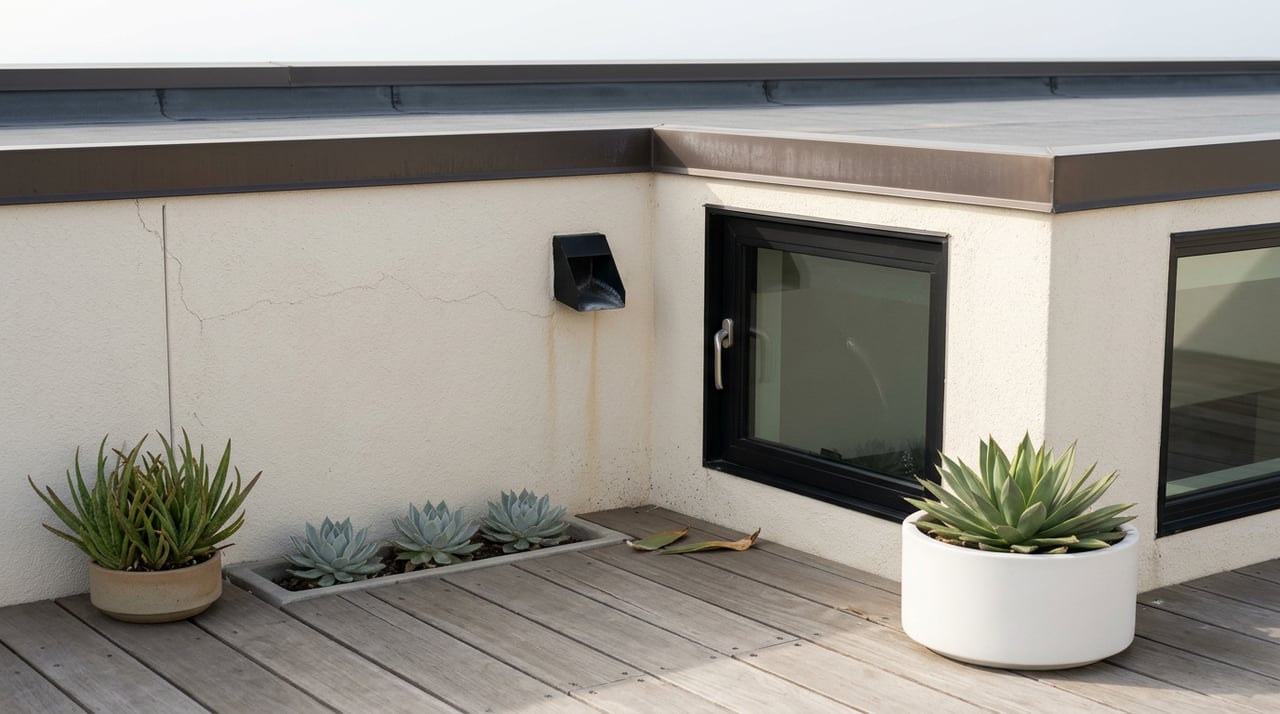
| Flat and low-slope roof seams | Mid-century post-and-beam, contemporary glass-and-steel, and Spanish revival homes here use built-up, single-ply membrane, or torch-down roofs that pond water and hide leaks until they reach the structure | Buyers price a full membrane replacement into their offer, not a patch |
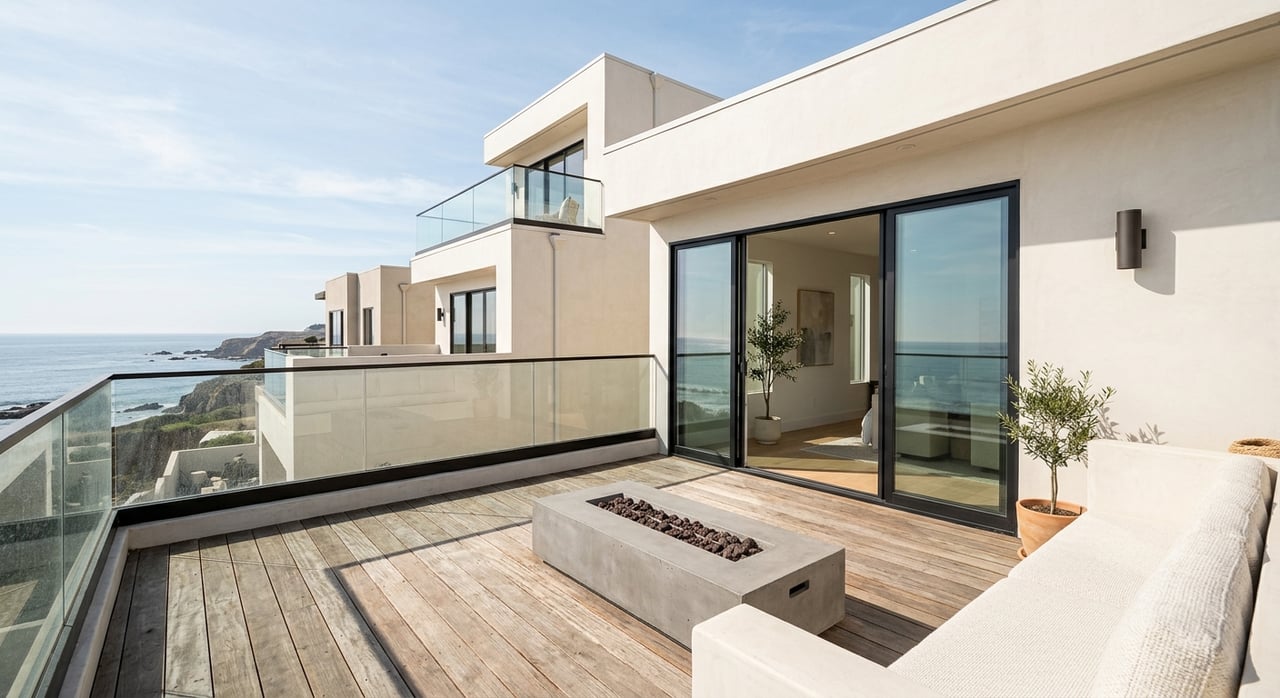
| Deck and balcony connector corrosion | Salt-driven corrosion attacks metal components, deck and balcony connectors, and window and door flashing; SB-326 applies to condo/HOA balconies, SB-721 to multifamily | Concealed structural finding, not a cosmetic one |
| Bluff and hillside drainage | Much of La Jolla is built on hillsides and coastal bluffs, and many homes rely on retaining walls, caissons, grade beams, and engineered drainage to stay put | Geotechnical report becomes a buyer contingency, not a nice-to-have |
| Chimney cap and flashing corrosion | Metal components deteriorate faster in marine air than inland, with caps that last 15 years in Escondido often needing replacement in 8 to 10 years near the ocean | Cheap fix, but ties into the roof and CDP question below |
| Drywood termite activity | WDO inspections are effectively mandatory, and coastal communities frequently deal with drywood termites while inland areas battle Western subterranean termites | Different treatment protocol and repair pattern than inland buyers expect |
Each of these findings is common enough that a coastal buyer's agent will assume it exists until proven otherwise. The negotiating question is not whether the house has them. It is whether the seller has already priced and disclosed them.
Here is the specific friction that catches La Jolla sellers off guard. Suppose the inspector flags a corroded cantilevered view deck. The contractor's estimate to rebuild it comes back at $38,000, a routine number for a house at this price point. A seller in Poway signs the contract that afternoon.
A seller in the La Jolla Coastal Overlay Zone should not. If the deck was originally permitted and the rebuild is truly like-for-like, the work may qualify as maintenance. If the deck was ever expanded, enclosed, or added without a permit, or if the rebuild changes the footprint, the fix becomes exterior structural work in the coastal zone. Properties in the California Coastal Zone covering most of La Jolla west of Torrey Pines Road require a Coastal Development Permit for any structural exterior work, including retroactive permits for unpermitted exterior additions, and the CDP process requires City of San Diego Planning Division review, a public comment period, and a California Coastal Commission appeal window, which for major exterior unpermitted work adds 6 to 18-plus months to the retroactive permit timeline.
Eighteen months is longer than most sellers can wait.
The practical implication is that the fastest path to close is rarely the fastest path to fix. Sellers with major unpermitted exterior work in 92037 often net more by disclosing and adjusting the price than by pursuing legalization on a listing timeline.
Disclosure is not optional in either scenario. California Civil Code §1102 requires sellers to disclose known unpermitted additions or alterations on the Transfer Disclosure Statement. "As-is" language limits repair obligations, not disclosure obligations. Selling as-is with a clean, front-loaded permit history is a defensible strategy. Selling as-is while hoping the buyer's inspector misses something is not.
Two developments this year shift how a La Jolla seller should think about coastal risk at the listing stage.
The first is a California Supreme Court ruling. On April 23, 2026, the California Supreme Court unanimously ruled 7-0 that the Coastal Commission cannot arbitrarily override county-approved coastal permits. For a seller, this reduces the tail risk that a City-approved remodel gets pulled back into a Commission appeal after months of local review. It does not eliminate the underlying permit requirement. The ruling limits the Commission's authority to override local government approvals, and San Diego property owners in the coastal zone must still obtain coastal development permits for most construction, remodeling, and grading projects.
The second is on the geotechnical side. Bluff-adjacent sellers in Bird Rock and along the Country Club and Hermosa hillsides should note that July 1, 2026 brought updated bluff setback guidance requiring 65-plus foot setbacks and sea level rise analysis. The practical read for a listing agent is that any addition already located seaward of that line is a buyer question waiting to happen. Front-loading a current geotechnical report closes that door before an offer is written.
For scale on how the review process actually plays out in 92037, on April 15, 2026, the La Jolla Development Permit Review Committee evaluated a proposed remodel that would expand an existing 1,957-square-foot Bird Rock home to 4,388 square feet. That is the level of scrutiny a large addition draws locally, and it is the reason a clean, closed permit file is one of the most valuable pre-listing assets a coastal seller can hand a buyer.
The order matters more than the vendor selection. A defensible sequence looks like this:
Done in this order, the report becomes a strategic asset. Done in the opposite order, sellers routinely spend money on repairs that either did not need doing or should have been sequenced differently.
Often, yes. The Coastal Overlay Zone applies to properties inside the City's mapped Coastal Zone boundary, and in La Jolla this generally includes beachfront and bluff-top properties, La Jolla Shores, and other shoreline neighborhoods, along with additional mapped areas nearby, with exact boundaries set by the City's certified Local Coastal Program maps. Parcel-by-parcel verification through the City is the only reliable check.
Yes. The Coastal Height Limit Overlay generally caps structures at 30 feet in large coastal areas, which is relevant to pergolas and pavilions with roofs or heaters.
You can, and some sellers do. Selling as-is does not eliminate the disclosure obligation, it only limits repair obligations, and failure to disclose can result in post-closing claims for rescission or damages. A pre-listing inspection is what lets you disclose accurately rather than guess.
In 2026, environmental disclosures expanded under the enforcement of Assembly Bill 455, and sellers must now explicitly disclose any knowledge of third-hand smoke residue from tobacco or vaping on the premises, since cosmetic improvements like fresh paint do not negate this obligation because toxins embed into drywall and HVAC systems.
SB-326 balcony inspections apply to condo and HOA buildings, and SB-721 balcony inspections apply to multifamily, and elevated decks and walkways here face heavy corrosion exposure. If your HOA has not completed its cycle, ask for the status letter before you list.
Selling a La Jolla home is a sequencing exercise as much as a marketing one. The physical findings are predictable. The regulatory response to them is where value is either preserved or given away. If you are considering a 2026 listing in the Village, Muirlands, La Jolla Shores, Bird Rock, or the Country Club hillsides, San Diego Dream House can walk your permit file, your inspection scope, and your pricing plan in the right order. Request a Complimentary Consultation and we will map the specific path from your parcel to a clean close.
Stay up to date on the latest real estate trends.



Debbie is passionate about making a difference through real estate, and she's committed to ensuring that every client receives the highest level of support and guidance.